Build Habits Around Your Natural Attention Span
 By
Most of us try to force long stretches of productivity without accounting for how attention naturally fluctuates.
Building habits that respect those rhythms makes focus more reliable and stress levels lower.
This article explains how to identify your attention patterns and shape simple routines around them.
You can use these ideas whether you work from home, in an office, or juggle varied responsibilities.
How attention cycles work
Attention comes in waves: periods of high focus followed by natural dips.
Research and practical observation show that cycles can range from 45 minutes to several hours depending on the person and task.
Trying to maintain peak focus through those dips often leads to decision fatigue and irritability.
The goal is to align task types with your probable energy curve rather than fight it.
Mapping tasks to your attention profile
Start by tracking when you feel most alert and when distraction creeps in across several days.
Label tasks as ‘deep’, ‘moderate’, or ‘light’ based on cognitive load rather than importance alone.
Place deep work during consistent high-attention windows and reserve administrative or creative wandering for lower-energy moments.
This approach reduces resistance and makes daily planning feel less arbitrary.
It also makes delegation clearer and less ad hoc.
Practical steps to build attention-aligned habits
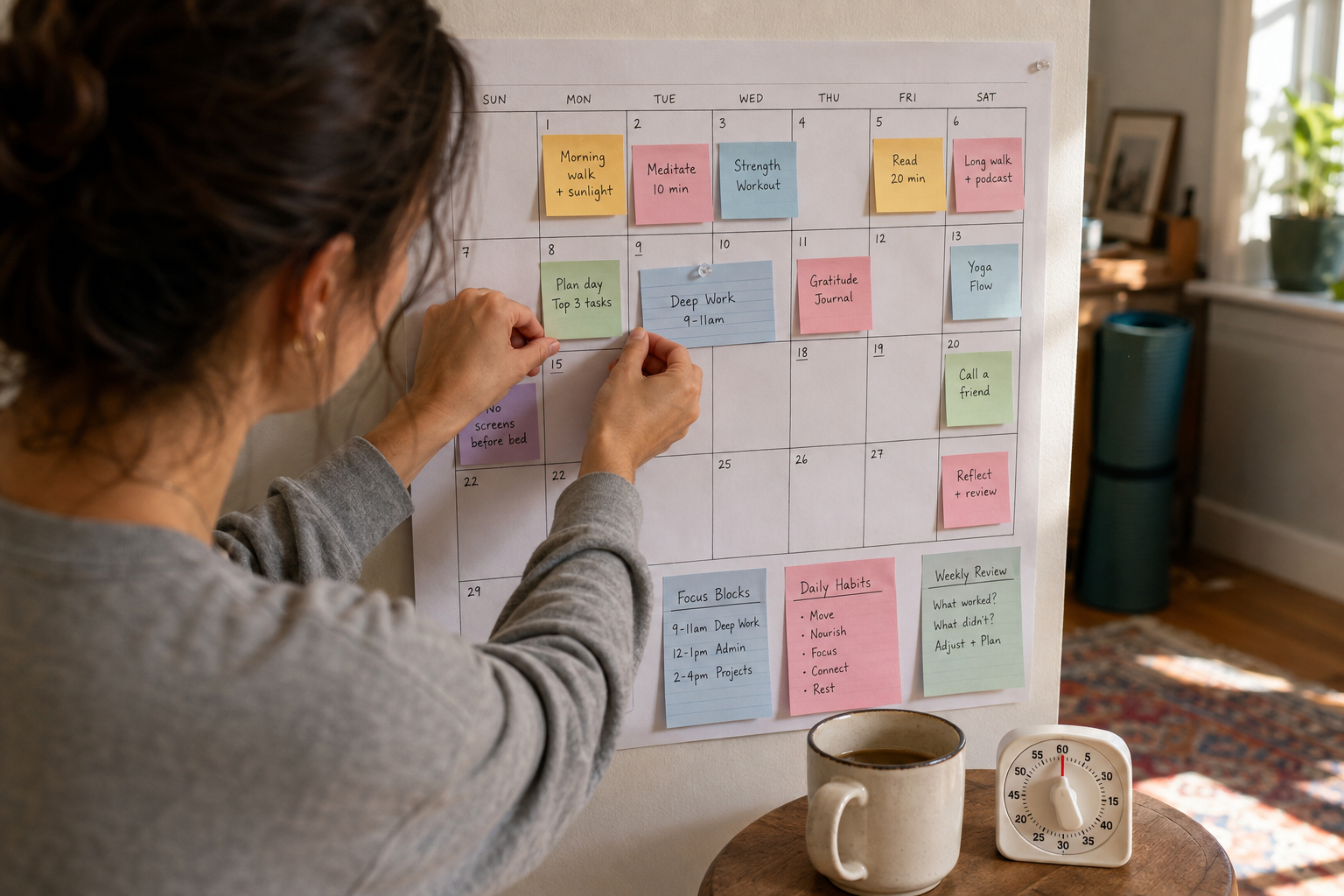
Begin with one small change: schedule a protected 45–90 minute block for a single deep task during a typical high-energy period.
Add brief transition rituals before and after each block, such as a two-minute stretch or a quick list of the next step, to signal the brain that focus is starting or ending.
Use predictable low-effort tasks to fill natural lulls, and treat breaks as part of the system rather than optional rewards.
Over time, tweak block lengths and timing based on real feedback instead of fixed rules.
Small, consistent alignment replaces willpower with structure.
Examples of attention-aligned routines
A writer might draft between 9 and 11 a.m., then answer emails during an early afternoon lull.
A parent juggling errands could do focused planning during a child’s nap and use short chores or calls for lower-energy windows.
Teams can synchronize short collaborative sessions when most members are fresh and leave asynchronous tasks for staggered attention periods.
The point is to build patterns that reduce switching and make transitions predictable.
Even modest shifts reduce friction and increase predictable productivity.
Conclusion
Designing habits around your attention span makes work feel smoother and less draining.
Start small, observe honestly, and adjust blocks to suit how you actually perform.
Over weeks, these modest changes compound into steadier focus and more calm.