Doorway Rituals to Quietly Signal Your Day
 By
Walking through a doorway can be an act of transition or just a step.
A tiny ritual at that moment tells your brain the chapter is changing.
It doesn’t need time or props — just a consistent cue you can repeat.
Over time those small signals reduce mental carryover and make days feel calmer.
Why the Threshold Matters
Thresholds are natural punctuation marks in our environment, and using them deliberately helps separate responsibilities. A brief pause at a doorway gives a chance to close a mental tab on what you were doing. That momentary break reduces the tendency to drag thoughts from work into rest or from errands into home life. Small pauses train your attention to move cleanly from one role to another.
Think of the doorway as a signal post rather than a boundary you must defend. With repetition the pause becomes immediate and automatic.
Three Simple Doorway Rituals
Choose a micro-action that feels natural and easy to repeat; consistency matters more than novelty. Pick something tactile, quiet, and brief so it won’t interrupt the flow of your day. These rituals are about signaling, not performing elaborate routines, so keep them under thirty seconds. Below are three options you can try and adapt.
- Pause and take one slow breath, letting the shoulders drop as you enter or leave a room.
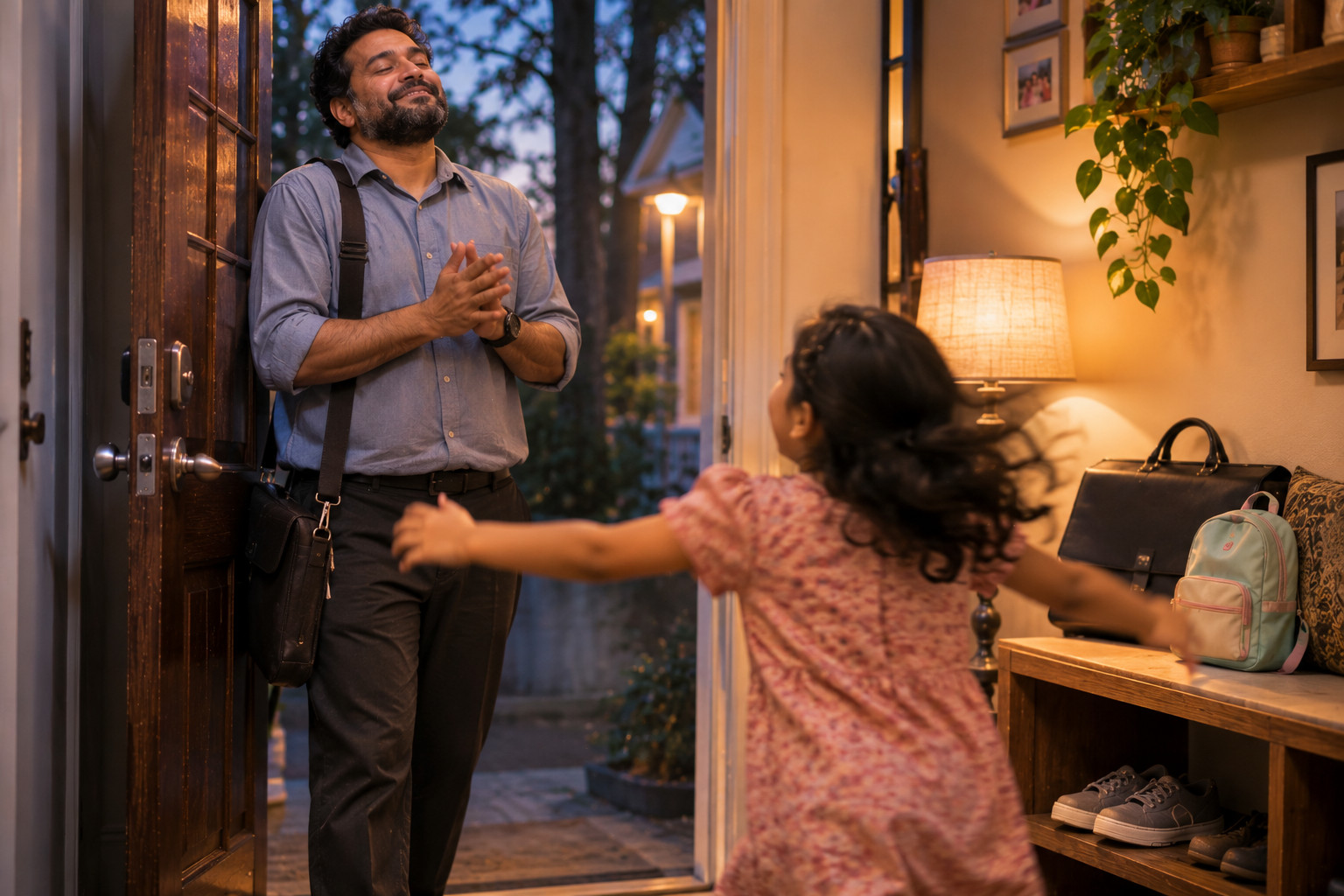
- Gently rub your palms together or click a pen — a small physical gesture that marks a switch.
- Say a short phrase under your breath, such as “done” or “here,” to create verbal closure.
Try each ritual for a week to see which becomes automatic without fuss. Over time you can mix and match depending on the situation and how much privacy you have.
Placement and Consistency
Not every doorway needs a ritual — focus on transitions that commonly leave tasks unfinished or feelings unsettled. The front door, the doorway to your workspace, and the entrance to the bedroom are often the highest-impact spots. Keep the action simple so you won’t skip it when you’re rushed or tired. Consistency is what builds the habit and rewires the association.
Use subtle cues to remind yourself at first, like a sticky note or a particular object by the door. After a few weeks the cue fades and the ritual becomes quietly habitual.
Conclusion
Small doorway rituals ask for almost nothing and can give steady benefit.
They create mental seams between tasks so you leave one role behind before stepping into the next.
Start with a single, simple cue and let it quietly reshape how your day feels.