Leveraging Neighborhood Networks to Improve Local Journalism
 By
By Neighborhood networks are a practical, underused resource for local journalism that can broaden sources, amplify trust, and surface stories that matter. When reporters map and engage existing relationships—community groups, schools, small businesses—coverage becomes more relevant and resilient. This article outlines concrete ways newsrooms can identify networks, create recurring touchpoints, and convert local signals into dependable reporting. The aim is to make community connections a repeatable part of editorial practice rather than an occasional outreach effort.
Creating systems to gather and maintain community intelligence reduces noise and increases the signal journalists act on. These practices help outlets cover everyday problems, celebrate achievements, and hold local power to account. The guidance below is designed for teams of different sizes and resource levels. It focuses on reciprocity, clarity, and practical workflows.
Identify and Map Local Networks
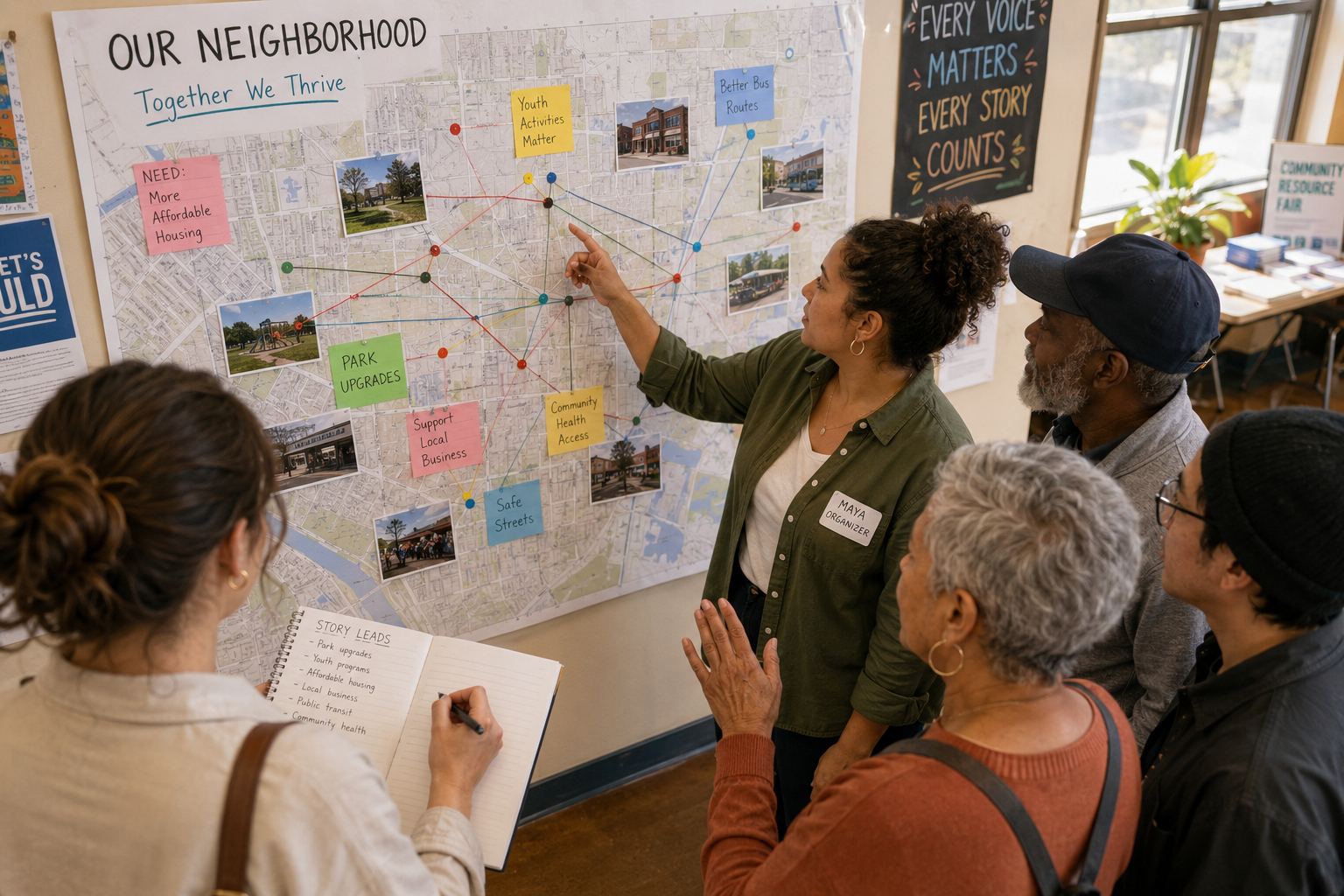
Start by inventorying the organizations and individuals that already play roles in neighborhood life, from block associations to faith groups and youth programs. Use simple spreadsheets or shared documents to record contacts, meeting cadences, communication preferences, and typical issues raised. Prioritize nodes that touch many residents, such as libraries, parent-teacher associations, and health clinics, because they are often information hubs. Regularly update the map and make it accessible to reporters, editors, and community liaisons so knowledge does not stay siloed.
Mapping is not a one-time project; it is a living resource that reduces onboarding time for new reporters. It also highlights gaps in coverage where new beats or partnerships could add value. Treat the map as both editorial intelligence and community relationship inventory.
Create Reliable Touchpoints With Community Hubs
Establish recurring, low-effort interactions that fit existing rhythms in the community, such as monthly newsletters to local groups, drop-in hours at libraries, or a regular presence at farmer markets. Consistency builds trust and makes community members more likely to share tips and feedback. Make clear what the newsroom can and cannot do, and outline how information will be used to avoid misunderstandings that erode trust. Keep communication concise and actionable so it respects partners’ time and earns continued engagement.
- Host quarterly roundtables with neighborhood leaders.
- Offer short training sessions on sharing tips securely.
- Create a dedicated channel for scheduling interviews and fact checks.
These touchpoints should be easy to sustain and measured against simple outcomes like tip volume and attendance. A light, steady presence often produces deeper sources and better story flow than sporadic outreach.
Turn Networks Into Timely, Trustworthy Reporting
Use the network map and touchpoints to build reporting pipelines that surface issues early, verify details quickly, and follow up with affected residents. Prioritize stories that solve problems, explain processes, or correct misinformation—coverage that delivers clear community value. Train reporters to document sources and confirm facts through multiple nodes in the network to maintain accuracy and fairness. When possible, publish follow-ups showing how reporting influenced outcomes or clarified complex topics.
Transparent attribution and visible corrections reinforce credibility within networks. Regular reporting that reflects community priorities strengthens readers’ sense that the newsroom serves them and not outside interests.
Maintain Reciprocity and Measure Value
Reciprocity keeps partnerships healthy: share reporting results, offer promotion for community events, and invite feedback on coverage priorities. Track simple metrics such as number of community contacts, tip conversion rate, and readership engagement on neighborhood stories to assess impact. Use those measures to adjust outreach, allocate reporter time, and justify small investments in community-facing roles. Prioritize sustainable practices so relationships endure independent of short-term staffing changes.
Regular check-ins and transparent metrics create accountability on both sides of the partnership. When communities see tangible benefits from collaboration, networks grow stronger and reporting becomes more rooted and useful.
Conclusion
Neighborhood networks are an essential, low-cost asset for local journalism that boosts relevance and trust. By mapping contacts, creating steady touchpoints, and converting connections into verified reporting, newsrooms can better serve residents. Small, consistent investments in reciprocity and measurement produce outsized returns in community impact and newsroom resilience.