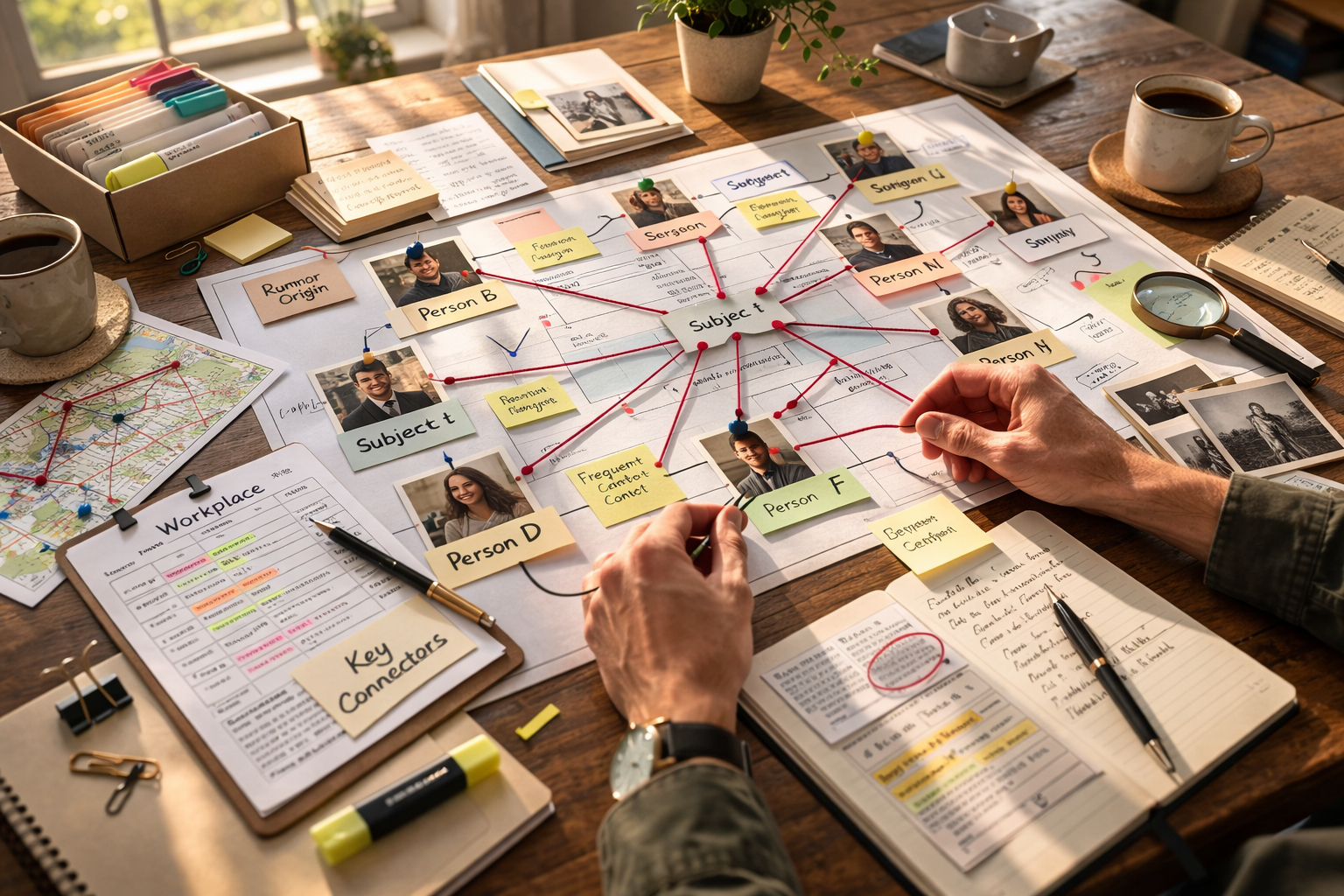
Mapping How Rumors Move Through Social Circles
 By
By Rumors weave through everyday life, shaping perceptions and conversations in ways we often overlook. They can start small and spread quickly, changing as they pass from person to person. Understanding the dynamics of rumor transmission helps communities respond more thoughtfully. This article explores where rumors begin, how they travel, and what people can do to reduce harm.
Recognizing patterns in gossip is useful for individuals and groups alike. By seeing common routes and motives, responses can be more targeted. The next sections examine mechanisms, impacts, and practical strategies to manage rumor flow.
Origins of Rumors
Rumors frequently begin at the intersection of uncertainty and social need, filling informational gaps when facts are scarce. They may arise from misinterpretation, incomplete data, or intentional exaggeration intended to influence opinion. Emotional triggers like fear, curiosity, or amusement increase the chance a story will be shared. Context and the credibility of the initial source also shape whether a claim will stick.
Identifying the origin helps trace how and why a rumor gained traction. Early intervention at the source can prevent distortion and reduce downstream impact.
How Rumors Travel
Transmission paths follow social networks, where connections act like channels carrying information from node to node. Close-knit groups often amplify stories quickly while broader networks spread them more widely but with greater variation. Social norms, platform affordances, and message simplicity all affect speed and fidelity. Repetition and endorsement by trusted members make a claim feel more believable.
- Face-to-face conversations accelerate emotional spread.
- Private messages sustain persistent narratives.
- Public posts increase reach but invite rapid alteration.
Mapping these routes reveals intervention points where clarification and verification can interrupt the chain. Tailored responses can slow or correct harmful narratives more efficiently than blanket denials.
Effects on Relationships and Trust
Rumors can erode trust, damage reputations, and create lasting tensions even after facts emerge. They shift group dynamics by rewarding attention and sometimes punishing those targeted. Recovery depends on transparency, accountability, and the willingness of social actors to acknowledge mistakes. Repairing trust is often a slower process than the initial spread of misinformation.
Understanding this helps prioritize restorative actions and communication strategies. Focusing on evidence and empathetic dialogue improves chances of reconciliation.
Practical Ways to Respond
Effective responses combine verification, calm communication, and focused correction rather than public shaming or amplification. Encourage critical questions, share credible sources, and model restraint in forwarding unverified claims. Organizations benefit from clear channels for reporting concerns and timely, factual updates. Community norms that value accuracy and respect lower the incentive to spread harmful stories.
Training conversational habits and promoting verification as a social norm reduces the overall volume of rumor traffic. Small changes in behavior compound across networks.
Conclusion
Rumors move through predictable social patterns that can be mapped and mitigated. Thoughtful interventions focus on verification, clear communication, and repairing trust. With deliberate practices, communities can limit harm and promote healthier information flow.