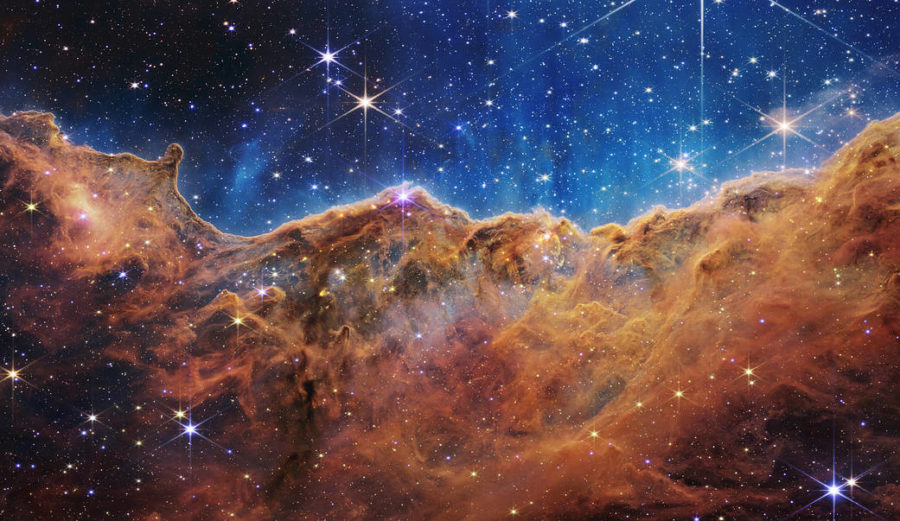
New Discoveries in Space That Could Redefine Science
 By
By Humanity’s understanding of the universe is evolving faster than ever before. Advances in space exploration, telescopes, and data analysis are uncovering discoveries that challenge long-held scientific assumptions. From distant galaxies to nearby planetary systems, these breakthroughs are reshaping how we think about space, time, and life itself. What once belonged to science fiction is now entering the realm of serious scientific inquiry.
Uncovering New Worlds Beyond Our Solar System
One of the most exciting developments in modern astronomy is the discovery of exoplanets—planets orbiting stars beyond our solar system. Scientists have identified thousands of these worlds, some located in regions where conditions may support liquid water. These findings expand the possibility that life could exist elsewhere and force scientists to reconsider how common habitable environments might be across the universe.
Rewriting the Rules of Black Holes and Gravity
Recent observations of black holes are reshaping our understanding of gravity and spacetime. The detection of gravitational waves confirmed predictions made decades ago and opened a new way of observing cosmic events. These waves provide insight into collisions between massive objects and offer clues about the structure of the universe at its most extreme scales. Such discoveries push the limits of physics and inspire new theoretical frameworks.
Clues About the Origins of the Universe
Powerful space telescopes are peering deeper into space—and further back in time—than ever before. By observing ancient galaxies, scientists gain insight into how the universe formed and evolved after the Big Bang. These observations challenge previous models of galaxy formation and suggest that cosmic structures developed faster and more dynamically than once believed.
The Search for Life and Organic Molecules
Space missions have detected organic molecules on distant moons, asteroids, and interstellar clouds. These complex compounds are the building blocks of life and suggest that the ingredients for biology are widespread throughout the cosmos. Discoveries on icy moons and Mars-like environments hint that life-friendly chemistry may exist far beyond Earth, reshaping our understanding of biology’s potential reach.
Conclusion
New discoveries in space are redefining science by challenging assumptions and expanding what humanity considers possible. As technology improves and exploration deepens, each breakthrough adds a new piece to the cosmic puzzle. These findings not only transform scientific knowledge but also redefine humanity’s place in the universe, reminding us that discovery is an ongoing journey with limitless potential.