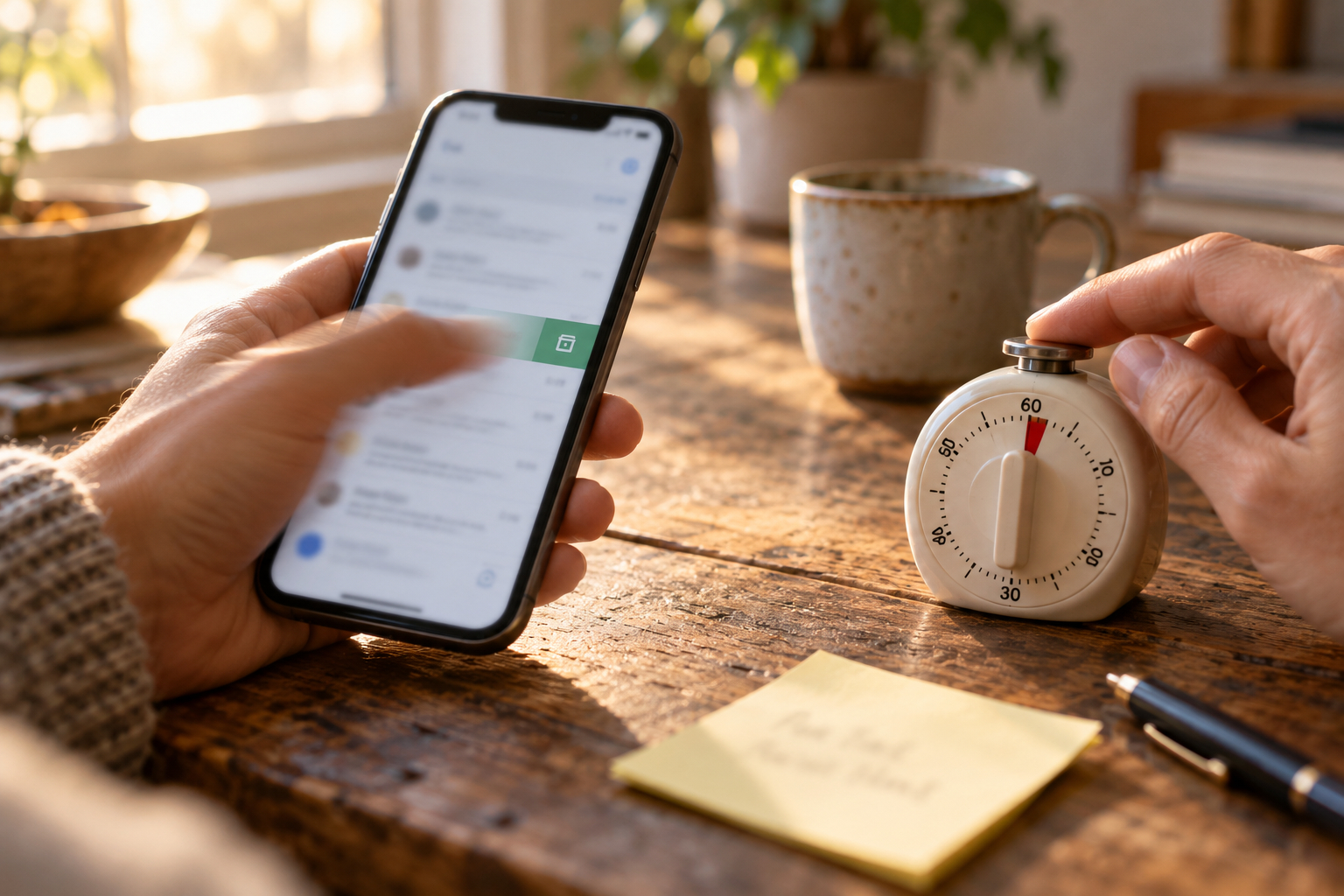
One-Minute Closures: Small Endings That Free Your Next Task
 By
Ending a task well doesn’t have to take long.
A brief, intentional close—sixty seconds—can clear mental clutter and make starting the next thing feel easier.
These are practical moves you can do at your desk, in the kitchen, or before a meeting.
Try a one-minute closure and notice how momentum changes.
Why One Minute Works
We often carry unfinished details from one task into the next: unanswered emails, loose plans, or a half-finished thought. A short closure focuses attention on what remains and what truly matters. By spending sixty seconds, you reduce cognitive residue without breaking flow. It’s minimally disruptive but deliberately complete.
Think of it as a final sweep that signals the brain to shift. Over time this tiny habit reduces background tension.
Simple One-Minute Closures to Try
You don’t need special tools. A predictable, repeatable motion is what counts. Here are straightforward closures that fit into everyday routines.
- Tidy one visible surface: clear your desktop or wash a mug.
- Write a single ‘next step’ note and capture it.
- Take two deep breaths, stand, and stretch.
- Delete or archive one email, or file a message.
- Close the tab you’re on and open a blank note.
Pick one or two that match your context and practice them for a week. They become cues that your brain reads as ‘done.’
When to Use These Closures
Use a one-minute closure at natural transition points: at the end of a meeting, before lunch, or when switching from work to home tasks. They are especially useful after interruptions, when your attention is scattered. For creative work, a quick jot of what’s next protects ideas from being lost. For household chores, a short wipe-down or putting a tool away cues completion.
You don’t need to do it every time, just consistently enough that the action becomes familiar. The goal is gentle structure, not another obligation.
Making the Habit Stick
Treat a one-minute closure like any other habit: tie it to something that already happens. Put a sticky note where you end your work, or use the end of a calendar event as a reminder. Start with a single closure each day, and increase frequency only if it feels useful. Track a simple win — a checkmark — to see progress. Avoid perfection; the point is regularity, not flawless execution.
When you miss one, try again at the next transition. Over time the small act becomes an automatic pause that preserves energy.
Conclusion
A sixty-second ending is a small investment that pays off in clarity and less mental carryover.
Start small, choose one move, and repeat it at key moments.
Over weeks the habit carves smoother transitions and frees attention for what matters next.