Using Sensory Cues to Create Calm, Focused Daily Transitions
 By
Small sensory cues can quietly shift how you move from one task or moment to the next. By pairing simple sounds, scents, textures, or visual markers with transitions, you create reliable signals for your attention and mood. These cues require little time and can be adjusted to fit work, home, or travel routines. Over weeks they build a predictable rhythm that eases stress and supports focus.
Why sensory cues matter
Sensory cues tap into automatic responses in the brain, which means they can be more effective than conscious reminders alone. When a particular scent, sound, or visual pattern is repeated at transition points, your nervous system begins to anticipate the next state. That anticipation reduces friction and emotional reactivity, making it easier to shift gears. For people with busy schedules or frequent interruptions, cues act as tiny anchors.
Applied consistently, cues also conserve cognitive energy. Instead of deciding how to pause or prepare each time, you rely on a familiar signal that prompts the right response. This predictability improves efficiency and builds a calmer baseline across the day.
Practical cues to try
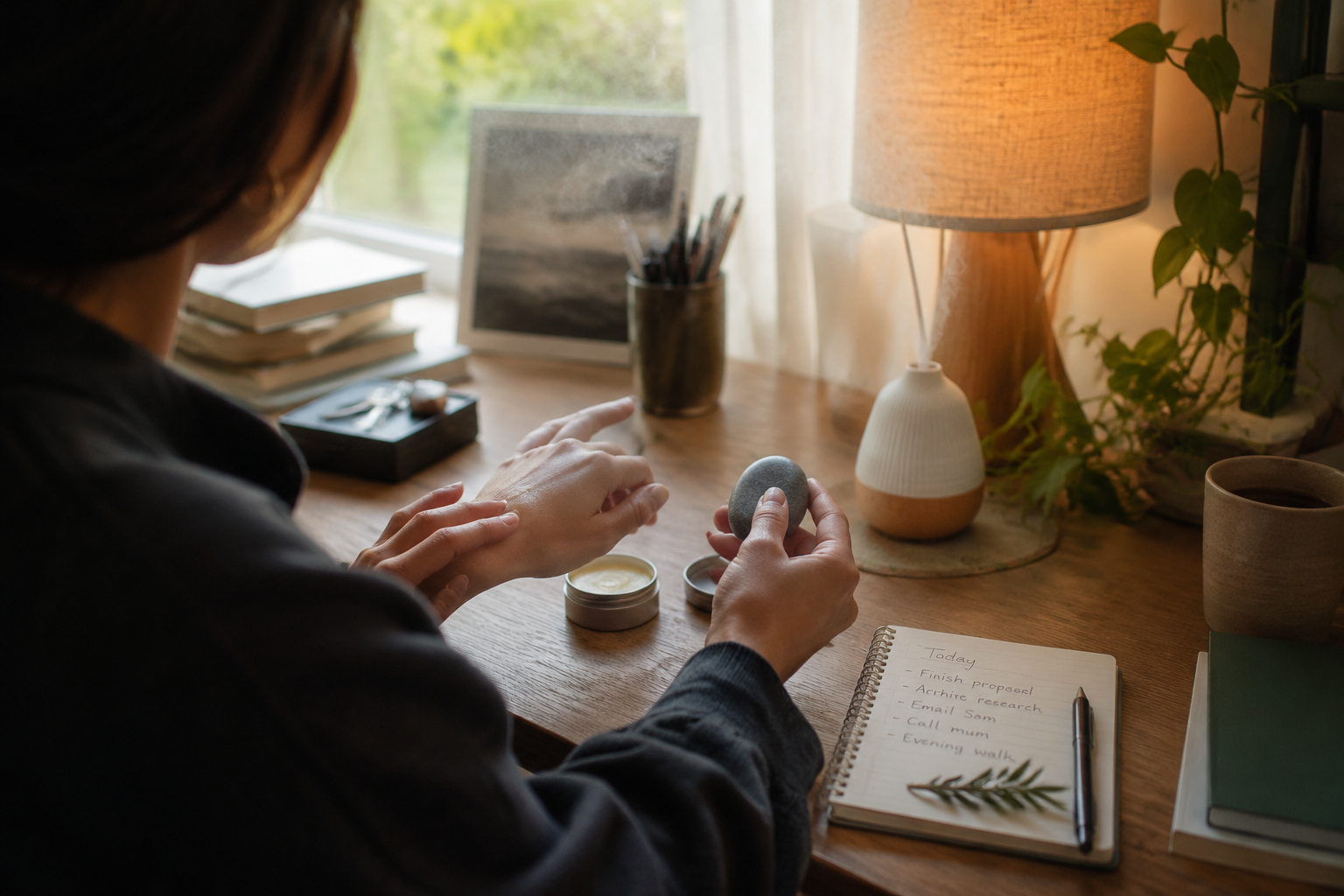
Choose cues that fit your environment and are simple to repeat. A short chime or playlist when you finish a meeting, a citrus-scented hand balm before a creative session, or a tactile object like a smooth stone you hold for thirty seconds can all mark transitions. Visual cues such as a clear desk, a lamp switched on for focused work, or a change of lighting can be powerful too.
- Auditory: a brief chime, a specific playlist, or sound cue on your device.
- Olfactory: a consistent scent applied before focused work or relaxation.
- Touch: a small object to hold, a brief stretch, or a hand massage.
- Visual: a cleared workspace, a distinct notebook, or a lamp toggle.
Start with one cue for a specific transition and keep it consistent. Once it reliably produces the desired mental shift, you can layer or adapt cues across different parts of your day.
How to build cues into your routines
Begin by observing the transitions that feel most jarring or costly in terms of energy. Pick a single cue that’s easy to access in that context and test it for at least two weeks. Track whether the cue helps you settle faster, stay on task, or leave work more cleanly. Small adjustments—different scent strength, shorter sound, or alternate object—help refine the effect.
Communicate cues when others are involved. If a family member or colleague knows the meaning of a cue, it reduces interruptions and reinforces the transition. Over time, cues become a reliable scaffold for steadier days.
Conclusion
Sensory cues are a low-effort way to create clearer transitions and reduce daily friction. Consistent, context-appropriate signals help your nervous system anticipate and settle into the next activity. With modest practice, these small rituals add up to more calm and focus across your day.