Designing Coverage That Solves Everyday Community Problems
 By
Local reporting regains relevance when it addresses practical problems people face each day.
This approach shifts coverage from abstract debates to actionable information residents can use.
It requires listening, mapping needs, and prioritizing stories that change outcomes.
When newsrooms focus on utility, trust and engagement often follow.
Understand Local Needs
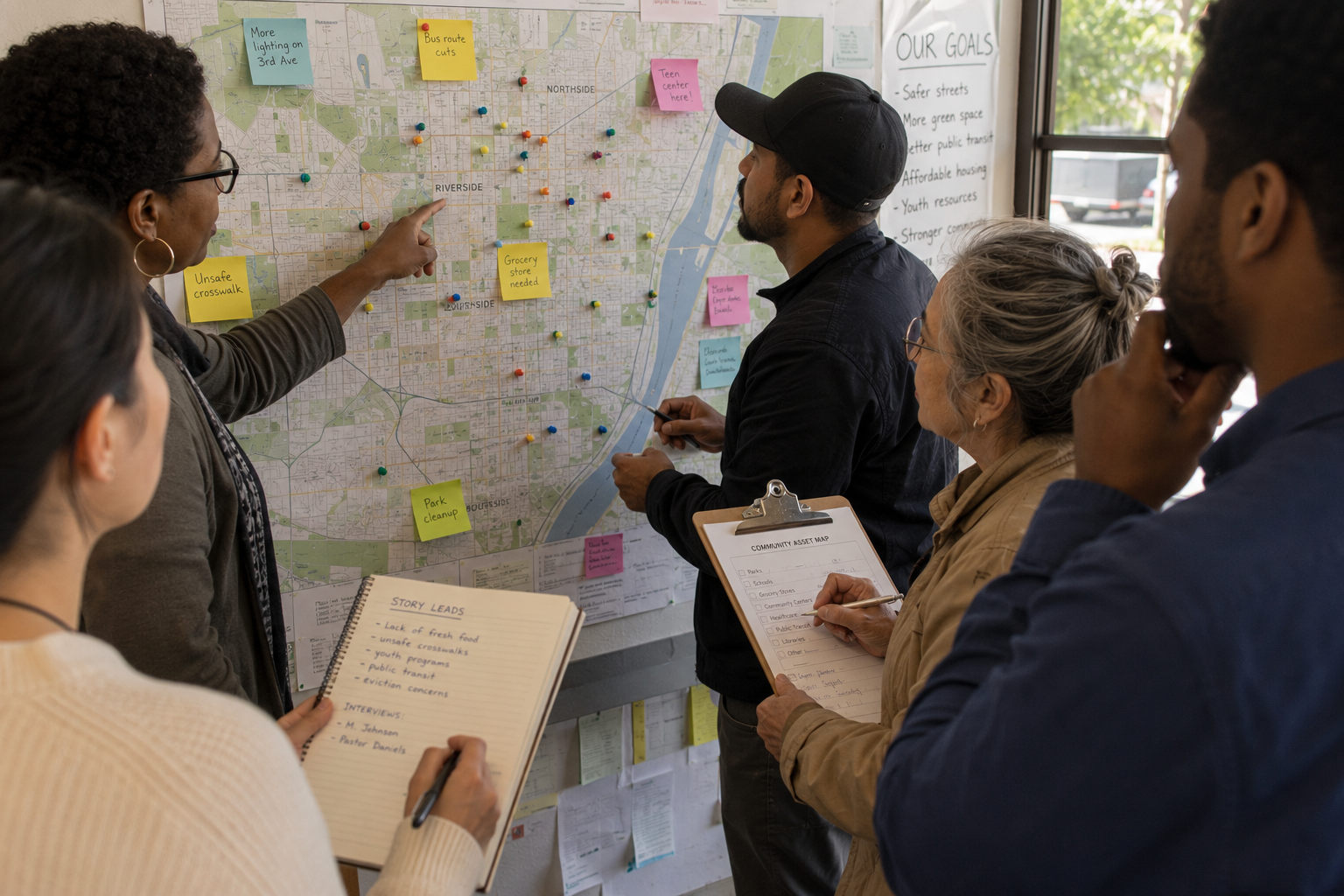
Start by mapping common concerns across neighborhoods: transit, utilities, schools, safety, and small-business access.
Use tip lines, community surveys, and conversations with service providers to surface recurring issues.
Prioritize beats by frequency and impact rather than newsroom tradition, so reporting aligns with what matters.
This method reveals where reporting can fill information gaps and prompt solutions.
Regularly revisit your map to keep coverage current.
Share findings internally so editors and reporters make consistent choices.
Report Solutions, Not Just Problems
Beyond documenting failures, show what works and why by covering successful programs, fixes, and experiments.
Explain steps residents or officials took, costs involved, and what to watch for to avoid pitfalls.
Include clear follow-ups that test whether proposed solutions were implemented and effective.
Solution-oriented stories equip readers to act and create accountability for decision-makers.
- How-to guides for common fixes
- Service timelines and checklists
- Profiles of local innovators and replicable projects
Keep these pieces practical and linked to resources so readers can follow up.
Place them prominently where people look for help.
Build Practical Community Partnerships
Partner with libraries, schools, community centers, and local agencies to source stories and distribute information.
Collaborations expand reach and help verify details faster while building credibility.
Train volunteers and community correspondents to report on small but vital beats, providing editing support and standards.
These partnerships create two-way flows: newsrooms inform, communities contribute context and solutions.
- Shared calendars for community events
- Co-hosted workshops on civic problems
Treat partners as equal contributors rather than distribution channels.
Sustainable partnerships require clear expectations and mutual benefit.
Measure and Iterate
Track practical impact metrics beyond pageviews, such as issue resolution rate, resource uptake, and policy responses.
Use simple dashboards that link stories to outcomes and community feedback, so editors can see which coverage produces measurable change.
Combine qualitative reports from residents with quantitative measures to build a clearer accountability picture.
Regular reviews help adapt beats and formats to what actually helps people.
- Resolution rate for reported problems
- Resource access and follow-through
- Policy or service changes prompted by reporting
Share these findings with the community to close the loop and demonstrate value.
Iteration based on evidence keeps reporting useful and sustainable.
Conclusion
Covering practical problems is both journalism and service.
When reporting helps people solve everyday issues, readership and trust grow.
Design coverage to be usable, accountable, and collaborative.