From Tips to Timelines: Organizing Actionable Neighborhood Reporting
 By
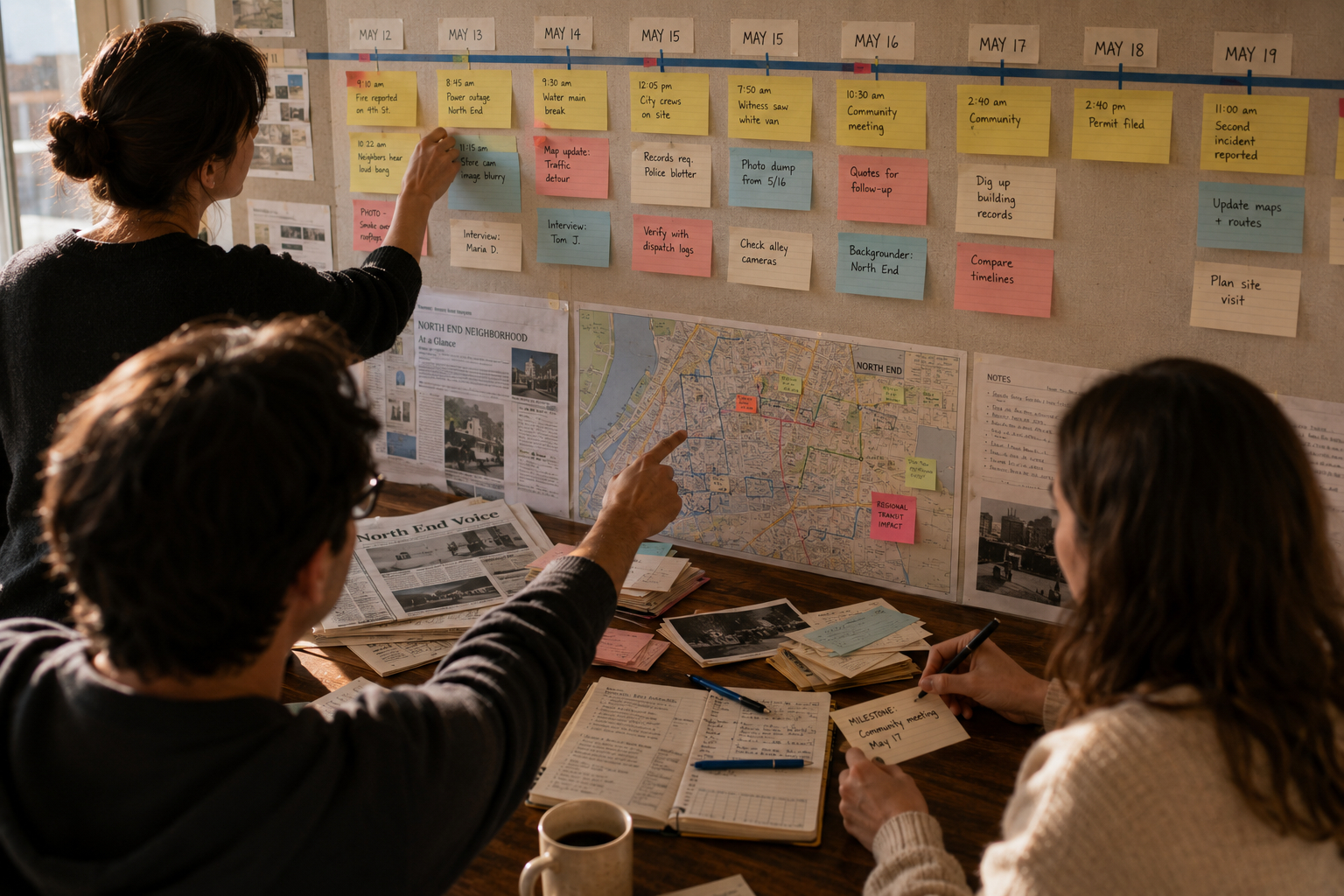
Neighborhood newsrooms often sit on a steady stream of tips, questions, and fragments of local knowledge. Turning that raw input into sustained, useful coverage requires more than ad hoc reporting. A timeline-based approach helps editors prioritize follow-ups, surface patterns, and communicate progress to readers. This piece outlines practical steps to convert everyday tips into organized, impactful reporting workflows.
Why organize tips into timelines
A timeline turns scattered leads into a coherent narrative about how local issues evolve over days, weeks, or months. It helps reporters spot recurring problems, map responsibility, and identify moments when pressure or public attention can prompt action. Timelines also make it easier to show readers what the newsroom is tracking and why certain items are rising in priority.
Using timelines signals to readers that reporting is systematic rather than random. That transparency builds trust and invites the community to provide corrections, updates, or additional context.
Practical steps to build a neighborhood timeline
Start by logging every tip with a date, location, contact, and desired outcome, then categorize by beat or issue. Create simple milestones for each tip—first verification, follow-up, public records request, and accountability step—and assign realistic deadlines. Use a shared spreadsheet or low-cost project board so the entire team can see status at a glance.
Hold a brief weekly review to reprioritize items based on new developments and community feedback. This keeps timelines living and responsive rather than static archives.
Tools and routines that keep reporting actionable
Choose lightweight tools that match your newsroom’s capacity: spreadsheets, shared calendars, or basic task boards often outperform complex systems that need heavy maintenance. Standardize note-taking so every entry includes who will follow up, when, and what the next evidence-gathering step is. Batch similar items together to pursue documents, interviews, or data requests efficiently.
Routines—daily tip triage, weekly timeline reviews, and monthly outcome reports—turn ad hoc work into predictable public service. Predictability also helps with planning short investigations and community updates.
Measuring community impact and adjusting
Track simple outcomes: corrections issued, government responses prompted, services restored, or new enforcement actions. Record how long items stay open and which workflow changes shorten response time. Solicit reader feedback about usefulness and clarity to refine what you track on timelines.
Use those lessons to simplify categories, tighten milestones, and reassign beats so timelines reflect where the newsroom delivers the most public value.
Conclusion
Timelines convert scattered tips into accountable, visible reporting efforts.
They make workflows clearer for reporters and more transparent for readers.
Adopting modest tools and regular routines yields disproportionate community value.