How Photos and Simple Maps Bring Local Stories Alive
 By
Good reporting explains what happened; thoughtful visuals show why it matters.
A clear photograph or a small map can turn a routine update into something a reader remembers.
Local newsrooms often have limited resources, so choosing straightforward, repeatable visual routines pays off.
This piece outlines practical ways reporters and editors can add accessible visuals without heavy overhead.
Why visuals matter for neighborhood reporting
Words provide context, but images and maps provide immediate orientation. A photograph makes a place feel familiar and gives readers a quick emotional anchor for a story. Maps compress time and space: a two-block inset can show a road closure, a new development, or shifting service boundaries at a glance. For busy readers, a single photo plus a tiny map often communicates more than a long paragraph.
Editors should think of visuals as part of the reporting, not an afterthought. A modest investment in better photos and clearer maps lifts everyday beats like schools, transit, and zoning.
Simple, low-cost photography tactics
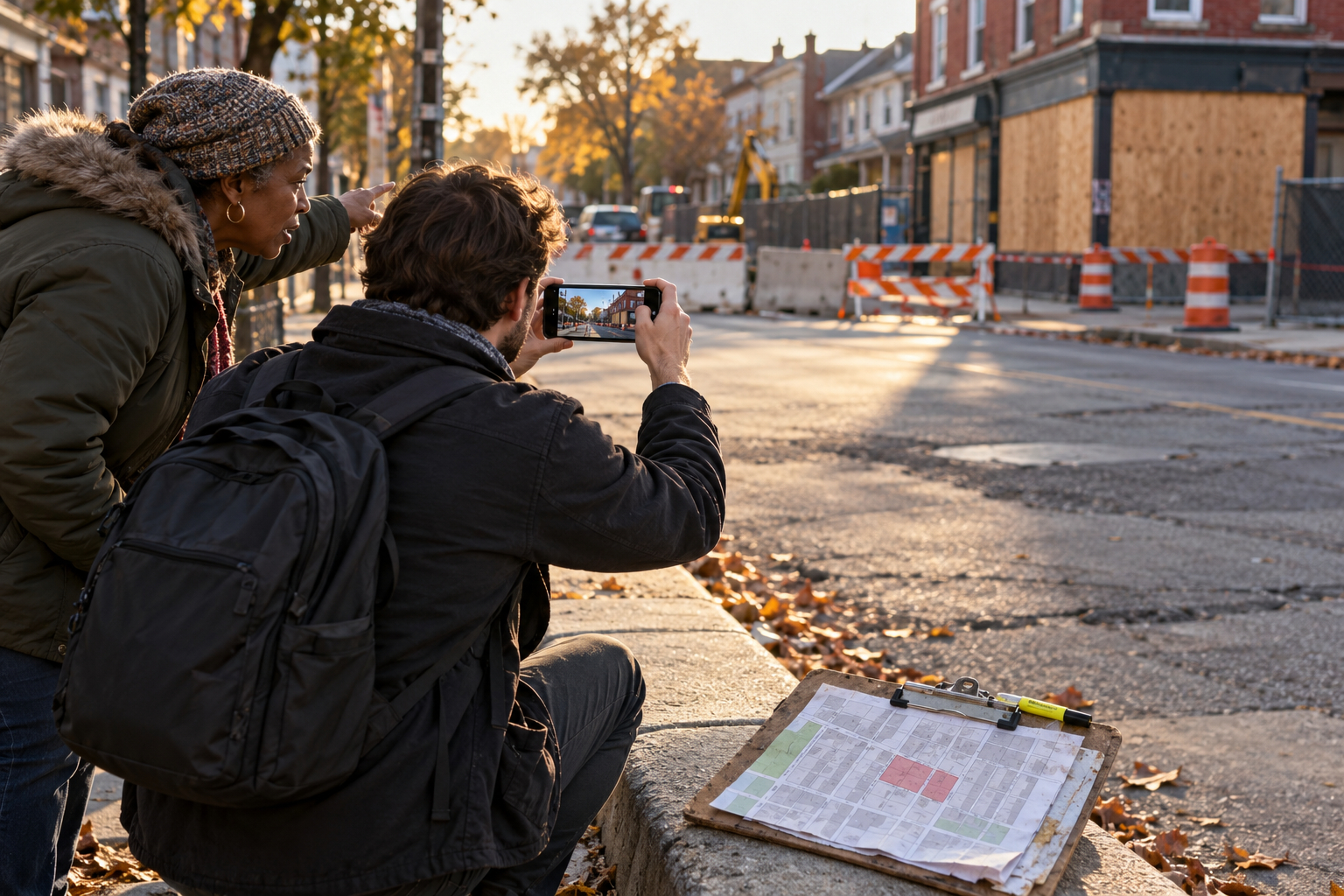
You don’t need a pro camera to take useful newsroom photos; a modern phone and a few habits will do most of the work. Shoot at the subject’s eye level to avoid distortion and make people feel present. Capture at least three frames: a wide establishing shot, a mid-range action image, and a close detail that gives texture. Watch light — morning and late afternoon soften shadows — and avoid heavy backlighting unless you want a silhouette.
- Use gridlines and tap to focus on phones for sharper images.
- Keep a folder with labeled shots for recurring beats (parks, council chambers, schools).
- Record short captions immediately: who, what, where, when, and why it matters.
Those three quick habits — framing, multiple angles, and instant captions — save time at editing and reduce the need for re-shoots.
Turning maps into clear context
Maps don’t need to be complex to be helpful. A simple shaded area, a pin, or a single highlighted route answers the reader’s primary questions: where and how big. Free tools and simple screenshots of open mapping services work well when combined with a concise legend and a directional cue like north. Keep colors limited and contrast high so maps remain legible on phones.
When possible, pair the map with a short explanatory sentence that points to the local impact — for example, who will be affected and for how long.
Workflow: quick checks to publish better visuals
Standardize a tiny checklist reporters can use before filing: did you get an establishing photo, a close detail, a caption, and a map or locator? Make one staffer responsible for quick quality checks and captions during busy shifts. Save templates for small maps and maintain a shared image folder so assets are easy to find and re-use across stories.
Consistent routines reduce last-minute scrambling and improve visual quality without adding hours to production. Small changes in habit yield big improvements in how readers experience local reporting.
Conclusion
Clear photos and simple maps make local stories easier to understand and harder to ignore.
They help readers place news in time and place with minimal effort from the newsroom.
Adopting a few consistent visual habits raises daily coverage with little extra cost.