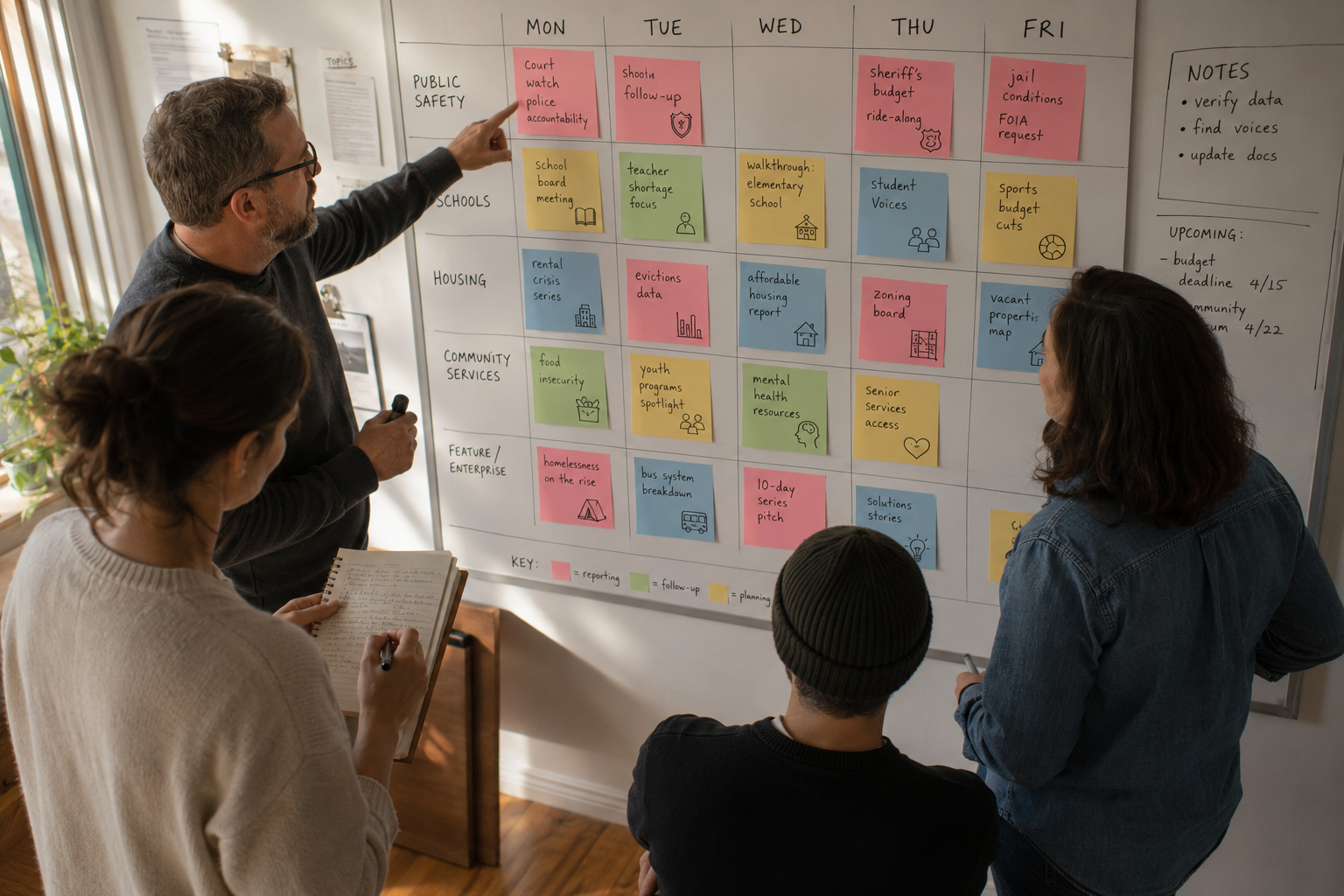
Cross-Training Reporters to Cover Community Service Needs
 By
By Cross-training reporters to cover community service needs strengthens coverage and builds newsroom resilience.
When reporters learn basic beats like public safety, schools, housing, and service resources they can respond faster to tips and chronic problems.
Cross-training also deepens reporters’ context, letting them spot recurring issues and connect residents to solutions.
Implemented thoughtfully, it reduces single-person dependencies and increases public value without inflating budgets.
Editors who plan these rotations upfront make transitions smoother.
Why cross-training matters
Newsrooms that cross-train prioritize public service outcomes and build redundancy into routines.
Reporters develop broader source networks and practical beats knowledge, which improves accuracy and speed.
This approach helps fill gaps when specialists are unavailable and supports more regular service-oriented reporting.
It also signals to readers that the newsroom can handle diverse community needs reliably.
Cross-training is an investment in capacity rather than a shortcut.
It complements beat expertise by making coverage more consistent.
Practical training routines
Start with short, focused modules: how local government works, school calendars, housing resources, and public safety workflows.
Use shadowing, ride-alongs, and paired reporting to transfer tacit knowledge quickly.
Implement weekly skill sessions on sourcing, public records, and constructive reporting techniques so routines become repeatable.
Document routines in an easily searchable handbook.
Refresh modules quarterly to keep pace with local changes.
New hires benefit from the compact onboarding.
Scheduling and beats
Design shifts so trained reporters rotate through adjacent beats, ensuring familiarity without losing depth.
Small newsrooms can assign primary and secondary beats per reporter, with regular handoffs documented in brief update notes.
Use calendars to flag community events and service deadlines so reporters can anticipate coverage.
Allow flexible workdays for urgent civic issues to avoid burnout.
Clear expectations prevent coverage gaps.
Rotation plans should be revisited monthly.
Feedback from reporters should guide adjustments.
Measuring impact and community feedback
Track tangible outcomes such as resource referrals that result from stories, service requests filed, and reader-reported problem resolutions.
Use simple metrics: number of follow-ups, community responses, and time-to-publish for urgent service pieces.
Regularly solicit resident feedback through short surveys and tipline analytics to refine training priorities.
Publish transparent follow-ups that show how reporting led to concrete change.
Share wins internally to reinforce the value of cross-trained work.
Measurement should prioritize public value over vanity metrics.
Use findings to adapt training and editorial focus.
Conclusion
Cross-training reporters is a practical, low-cost way to increase a newsroom’s public service capacity.
It boosts responsiveness, builds trust, and spreads institutional knowledge.
Start small, measure outcomes, and scale what demonstrably helps residents.