Small Newsroom Routines That Deliver Public Value Daily
 By
Local newsrooms that survive and serve do so through steady, repeatable routines tailored to community needs. Small habits — checking a school board agenda, following up on a service outage, or updating a neighborhood calendar — compound into visible public value. This piece outlines practical daily practices editors and reporters can adopt without adding headcount. The goal is to make coverage useful, trustworthy, and discoverable for local readers.
Establish Daily Reporting Rituals
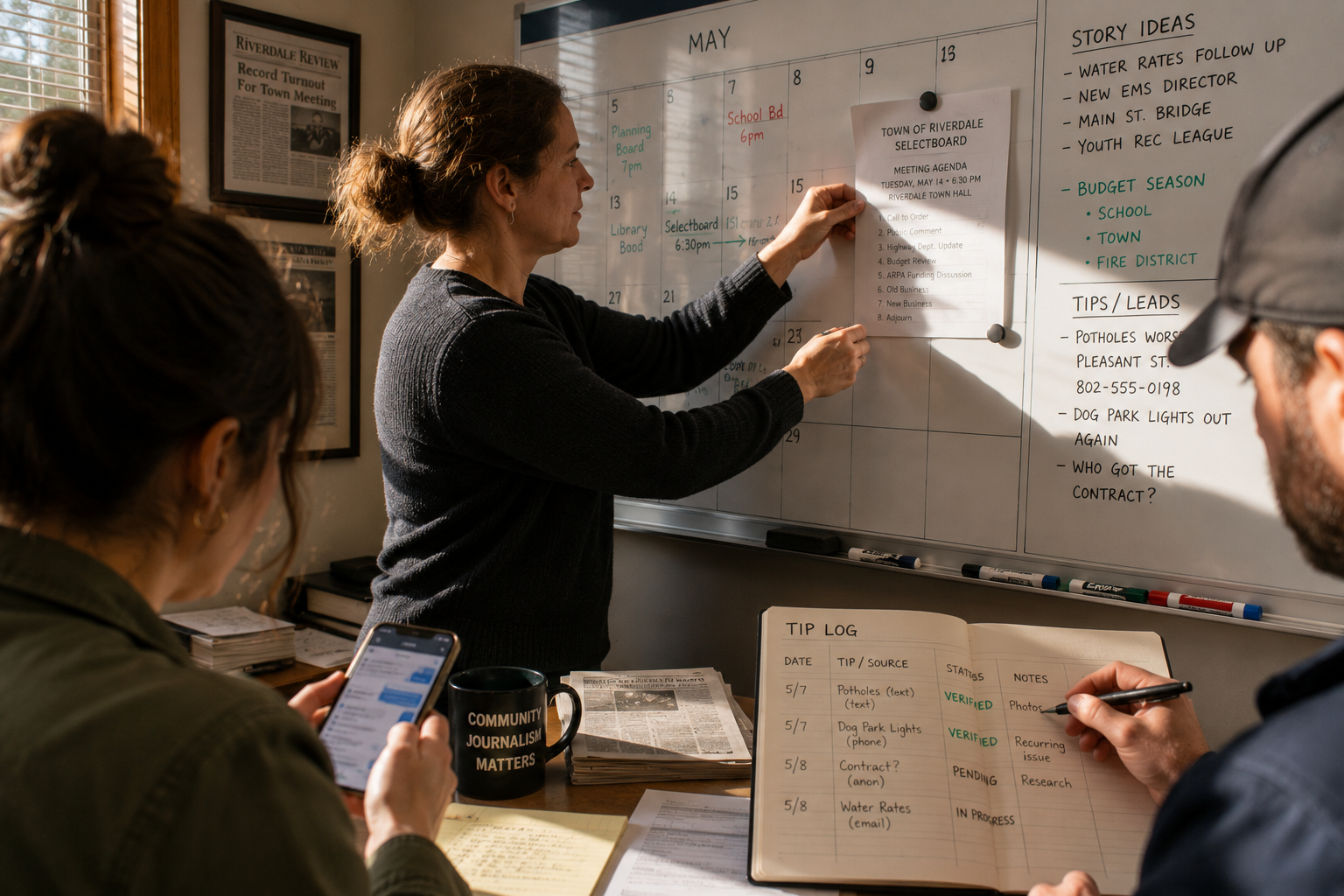
Design a short set of rituals each day that ensure basic civic needs are covered consistently. Morning agenda scans, a midday verification pass on tips, and an end-of-day note to update ongoing stories create predictable workflows. Rituals reduce the chance that urgent but small civic issues fall through the cracks, and they help reporters prioritize follow-ups. Consistency also signals reliability to readers who rely on the publication for routine information.
- Quick agenda checks for meetings and decisions.
- Standard verification steps for incoming tips.
Keep rituals lightweight so they fit into existing schedules and can scale with staff changes. When everyone knows the routine, contributors and volunteers can plug into specific tasks.
Prioritize Service-Oriented Coverage
Shift planning toward stories that solve or clarify everyday problems for residents. That means more how-to explainers tied to local services, clearer timelines for municipal projects, and recurring updates about transportation or utilities. Framing coverage as service reduces churn on trivial stories and increases the relevance of each piece. It also opens opportunities for simple products like a weekly checklist or a civic calendar that readers return to.
Service-oriented items can be short but must be accurate and timely to build trust. Editors should reserve slots for these entries in every edition.
Measure Small Wins and Iterate
Track impact metrics beyond pageviews to show community value: resolved tips, corrections that improved public outcomes, or people helped by a report. Small newsrooms can log these wins in a shared document and review them weekly to guide coverage decisions. Regular reflection turns routines into learning cycles, revealing which beats deserve more time and which processes need streamlining. Celebrating these wins also supports morale in lean teams.
Use qualitative feedback from readers to refine rituals and prioritize topics. Over time, that feedback loop cements the newsroom’s role as a practical public service.
Conclusion
Daily, modest routines focused on public service make local reporting consistently useful. Measuring small wins and adapting based on reader feedback helps newsrooms stay relevant and trusted. Implementing these practices requires discipline, but the payoff is sustained community value and stronger civic ties.